Full Article
about Valgañón
Mountain village near Ezcaray; noted for its Romanesque church and yew groves.
Ocultar artículo Leer artículo completo
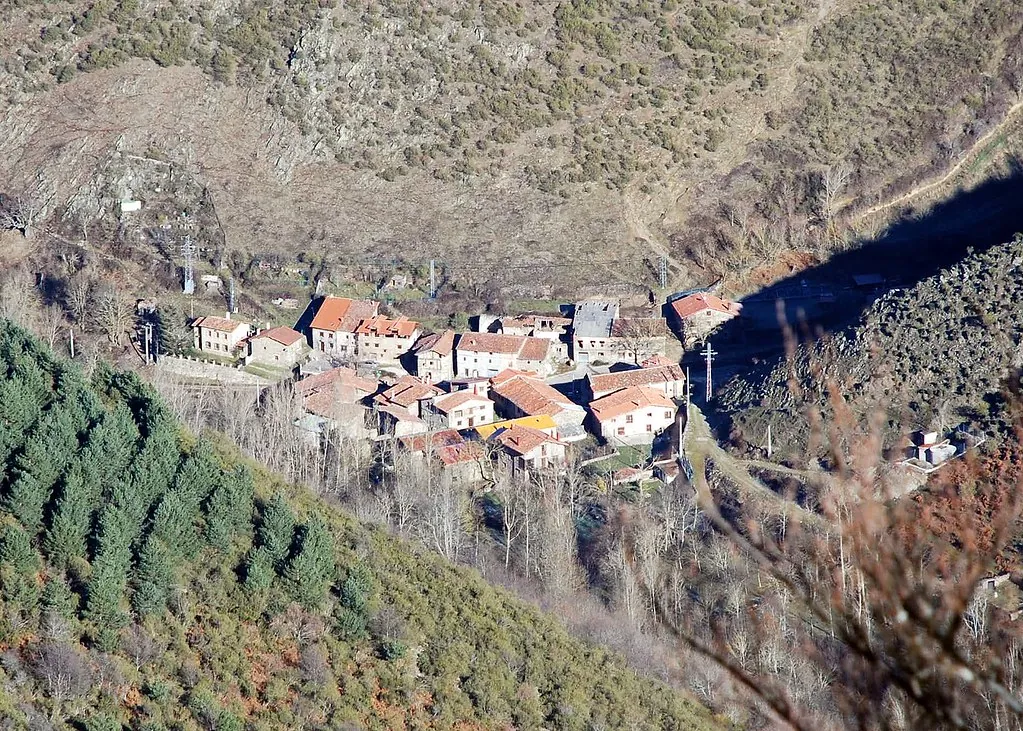
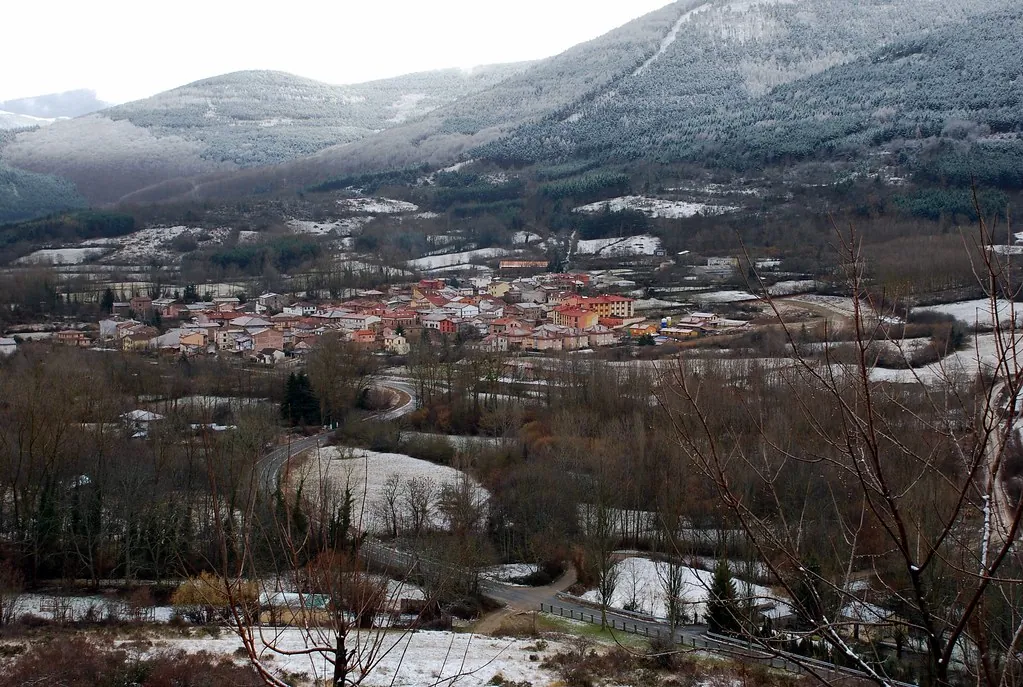
At 936 metres, Valgañón is the point where Rioja’s famous vineyards finally surrender to the Sierra de la Demanda. The last winery gate clangs shut, the road narrows, and suddenly you’re in a different province altogether – though the map insists you’re still in La Rioja. Stone houses huddle against the wind, their timber balconies painted the same green as the pine slopes behind. Eighty people live here year-round. On a quiet Tuesday in March, it feels like fewer.
The Village That Time Didn’t Forget – It Just Ignored
There’s no plaza mayor, no souvenir shop, no medieval archway framing a selfie. Instead, a single lane curls past vegetable plots and a church the colour of weathered barley. The church, San Martín de Tours, is locked more often than not; ring the number taped to the door and the sacristan arrives on a moped, wiping oil from his hands. Inside, the nave is plain, the stone cool enough to store wine. Which, coincidentally, is what happens beneath several houses – family cellars where Rioja alavesa casks sit beside bicycles and sacks of potatoes.
The rhythm is distinctly mountain, not Mediterranean. Gates shut at dusk. Dogs bark at shadows. By nine the only light comes from the bar at La Parra, where locals nurse small beers and discuss rainfall with the intensity most regions reserve for football. Visitors cluster near the wood-burner; the far tables stay cold unless you ask to move. A plate of grilled goat’s cheese costs €9; the chuletón for two weighs a kilo and will set you back €48. “It’s Logroño pricing without Logroño choice,” a Manchester couple mutter, then order another bottle of Alegre Valgañón white – crisp, almost Chablis-like – because there simply isn’t anything else.
Forests, Fog and the Occasional Wild Boar
Step past the last cottage and the tarmac turns to packed earth. Beech and oak climb steeply on both sides; in October the slope becomes a slow-motion fire of copper and rust. Way-markers exist, but discreetly – this isn’t the Lake District. A thirty-minute shuffle uphill brings you to a forestry track where the valley suddenly opens: south to the Ebro, north to the snow-streaked peaks of Burgos. Binoculars help; so does a jacket. Even in June the wind can knife through cotton.
The GR-190 long-distance path skirts the village, but most day-trippers follow the yellow dashes that loop back after 5 km. Morning is best – clouds often roll in by two, reducing visibility to the next gate. Wild-boar prints stud the mud; walkers occasionally glimpse a tawny retreating rump. Mushroom hunters appear after rain, knives in sheaths, eyes on the ground. Rules are strict: register at the town hall in Ezcaray first, carry ID, limit is 3 kg per person. Without a permit you risk a €300 fine and the contempt of every neighbour.
Wine at the Roof of Rioja
Alegre Valgañón is the village’s only bodega, though its grapes grow lower down near Tirgo where the climate is gentler. The winery occupies a former electricity substation on the edge of the hamlet; tours start at the stainless-steel tanks and finish in a stone alcove once used for hay. English is spoken if you email ahead; tastings run to four wines and a plate of local chorizo, price €18. The flagship Tinto is 95 % Tempranillo with a 5 % dash of Garnacha for lift – think Rioja’s answer to Côtes-du-Rhône rather than oaky blockbuster.
They produce barely 35,000 bottles a year, so nothing reaches UK supermarkets. Shipping can be arranged (£60 for a twelve-bottle case to London; allow ten days). Most visitors settle for a single bottle of the white, wedge it into a rucksack and hope Ryanair baggage handlers are in gentle mood.
When to Come – and When to Stay Away
April and May bring almond blossom on the lower slopes; daytime highs touch 16 °C, nights drop to 4 °C. September repeats the trick in reverse, with added wild thyme scent and the grape harvest further south. These are the sensible months.
January is beautiful but serious: the road from Ezcaray is routinely closed after 6 pm when snowploughs give up. Chains are compulsory, yet hire companies in Logroño refuse to supply them – “not our policy, señor.” Accommodation within the village is limited to three self-catering cottages (€90–€120 a night, two-night minimum). Heating is extra and payable in cash; bring small notes because the nearest ATM is twenty minutes away in Santo Domingo de la Calzada.
August fills with second-home owners from Bilbao. Prices at La Parra rise again; the single baker parks his van at 9 am and sells out by 9.25. If you dislike sharing a mountain path with boisterous teenagers and a Bluetooth speaker, pick another week.
Getting There Without Tears
From the UK, fly to Bilbao or Santander – both under ninety minutes’ drive. Car hire is essential: there is no bus, no taxi rank, no Uber. Take the A-68 to Logroño, then the N-120 to Nájera and the LR-113 up the valley. The final 13 km from Ezcaray are slow: tight bends, sudden gradients, the occasional cow. Allow forty minutes for this stretch alone; SatNav averages mislead. Petrol stations are scarce after Nájera; fill the tank and the spare can if you plan winter travel.
Parking is straightforward – a gravelled triangle before the church. Do not attempt to drive into the upper lanes: they are barely wider than a British driveway and reversing uphill on ice is nobody’s idea of fun. A pair of sturdy shoes and a fleece live permanently in the boot; weather can flip from bright sun to horizontal sleet within an hour.
One Hour, or One Week?
Valgañón suits the curious rather than the checklist traveller. Stay an hour and you’ll have walked every street, photographed the church and drunk a coffee. Stay a day and you can add a forest circuit, a winery visit and a three-course lunch. Stay a week and you’ll learn the butcher’s delivery schedule, know which cottage keeps geese, and probably be invited to help bring a flock down from the high pastures.
The village offers no epiphanies, no bucket-list tick. Instead it provides something British suburbs long ago mislaid: silence thick enough to hear your own pulse, night skies still unpolluted by orange glow, and the realisation that “remote” is only an hour from a dual carriageway. Bring a map, a coat and modest expectations – Valgañón will handle the rest.