Full Article
about Zorraquín
Quiet neighbor of Ezcaray; a well-kept village with pretty houses and gardens.
Hide article Read full article
A village that reveals itself slowly
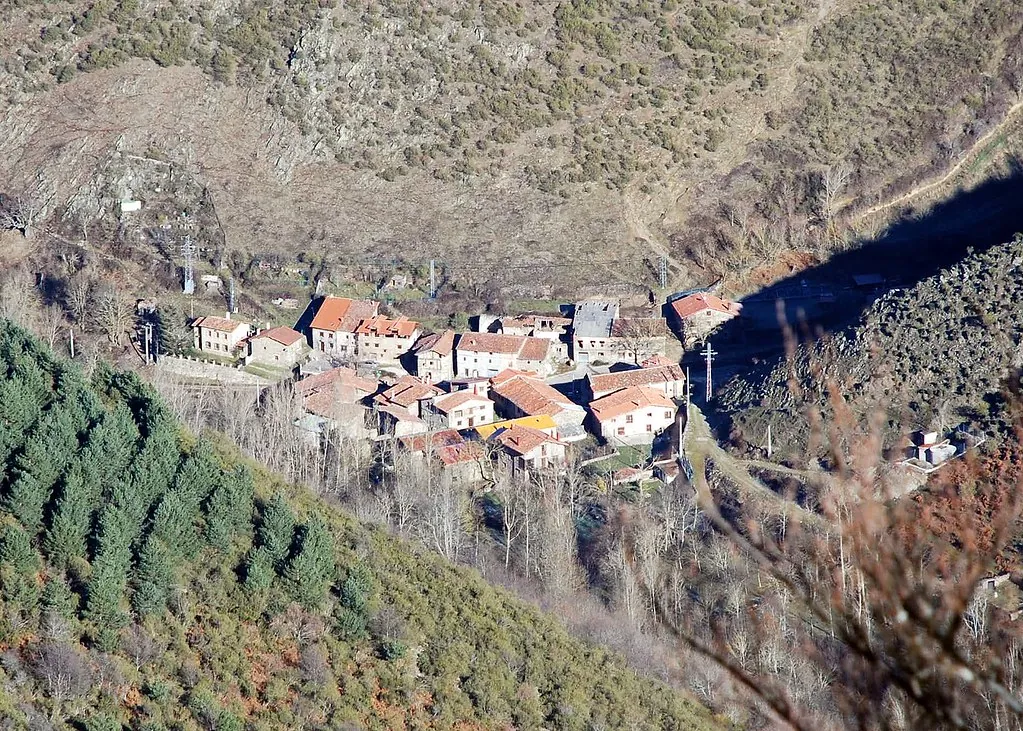
The road down from Ezcaray narrows just before arrival. The valley closes in, damp meadows appear, and then, almost without warning, the first stone houses. In Zorraquín, a municipality of barely 88 residents, the dominant sounds tend to be simple ones: water moving along a nearby stream, a dog in the distance, wind shifting through oak leaves. There are no headline attractions here. The place makes sense when you walk it at an unhurried pace.
Wandering its streets
The streets are short and slightly uneven, with stretches of cobbles where moss gathers in the shadier joints. Houses combine dark stone and aged timber. Some balconies look straight onto the street, their beams marked by decades of damp winters.
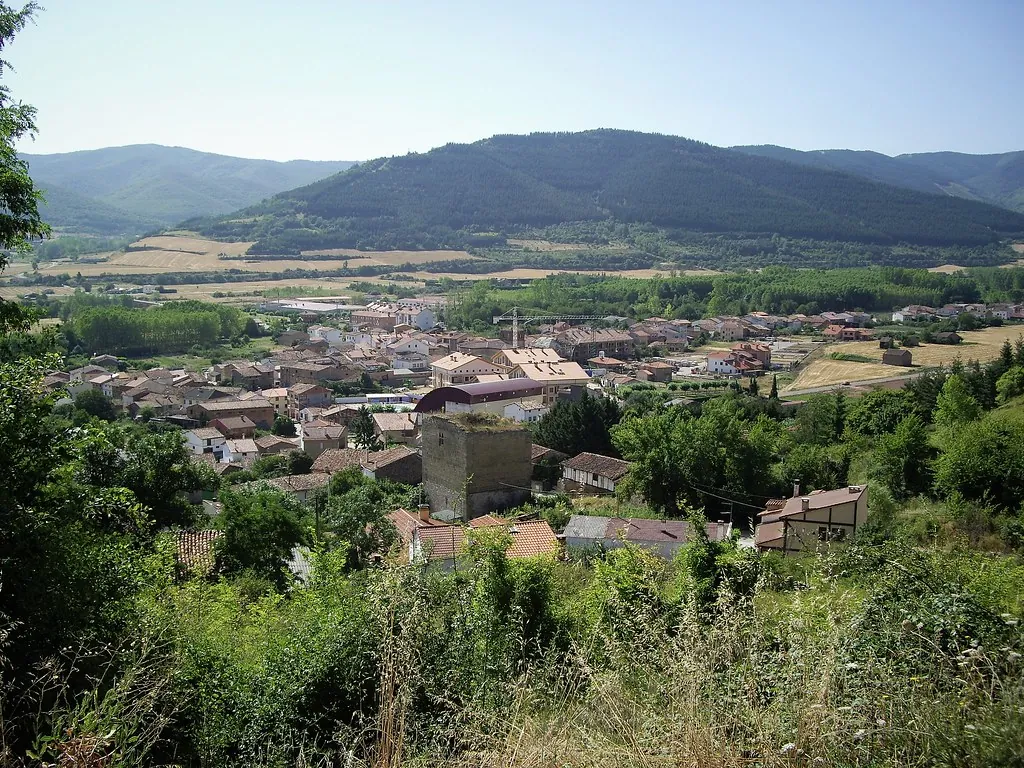
At the centre stands the church of San Andrés, plain in appearance, with a square bell tower visible from almost anywhere in the village. At certain times of day, especially towards evening, the light slips low between the houses and clings to the façades, bringing out the texture of the stone.
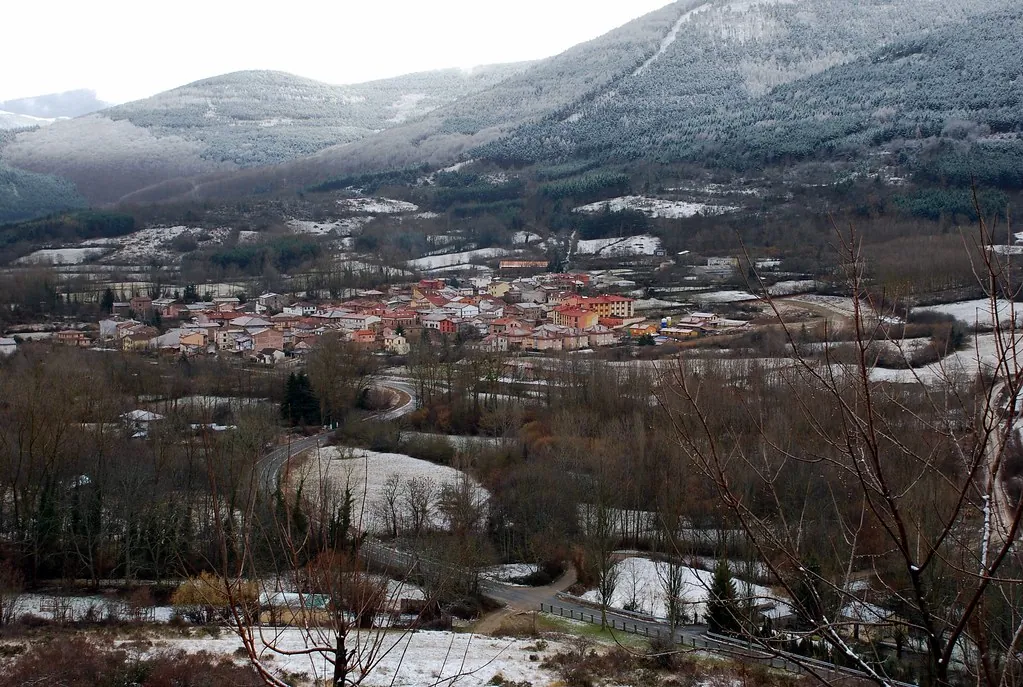
Step beyond the small cluster of buildings and the landscape changes quickly. Patches of beech and oak woodland appear, mixed with meadows where the ground often stays soft after rain. In autumn, fallen leaves cover the paths and crackle underfoot, and the air carries the scent of damp wood. In winter, when snow arrives, the village becomes noticeably quieter. White roofs and the trace of chimney smoke create a very different scene from the summer months.
Paths into the hills
Several paths lead out from the edges of Zorraquín towards the surrounding hills. Some head straight into woodland, while others cross open meadows before gradually climbing. Not all of them are clearly signposted, so it helps to have a route in mind if planning to walk for more than an hour.
After rainy days, the stones can be quite slippery, something typical in this part of the Sierra. Mud is also common in the shadier sections, even when the valley floor seems dry.
During wetter seasons, the nearby hills attract those looking for mushrooms. Varieties such as níscalos and boletus can appear in good numbers in some years, although this depends heavily on how rainy the autumn has been. If collecting, care is needed and it is worth checking local regulations.
Early in the morning, when mist still lingers at the bottom of the valley, the woodland takes on a particular kind of quiet. The only sounds tend to be streams and the faint brush of branches.
A short visit, unhurried
The village centre can be covered quickly. In one or two hours, it is possible to walk every street, noticing solid wooden doorways and the long eaves that protect façades from the rain.
It is worth pausing for a moment beside the church of San Andrés, then following one of the paths that lead out towards the edge of the village. Within minutes, open meadows appear, along with small watercourses flowing down into the valley.
On foggy days, which occur during some autumn mornings, the nearby woodland feels visually denser. The sound of running water becomes more present than the view itself.
Practical notes for visiting
A common mistake is arriving with footwear that is too light. Between the moisture, fallen leaves and occasional loose ground, flat-soled shoes can quickly become soaked or slippery.
It also helps to pay attention to where the car is left. The streets are narrow, and many access points lead directly to houses or farmland, so it is better to park at the edge of the village and continue on foot.
Another detail becomes clear quite quickly. Even in summer, the temperature drops noticeably after sunset, so a light jacket is useful towards the end of the day.
Spring usually brings very green meadows and plenty of water in the streams. Autumn, when the beech woodland begins to change colour, transforms the surrounding hills for a few short weeks. Winter can be cold, with snow in some years, which alters the condition of the paths. In summer, the pace remains slow. Many visitors pass through nearby Ezcaray, but here the atmosphere stays calmer.
From Ezcaray, the journey is short along a local road. The final stretch narrows slightly, so it is best to drive carefully, especially if another car is coming the other way.
Once in Zorraquín, the simplest option is to park at the entrance and get around on foot. Bringing water and an extra layer is usually enough for short walks in the area.
One thing stands out almost immediately: silence is part of this place. Anyone coming to walk in the hills will notice it, and it is worth keeping to that same unhurried rhythm.